

Neon is one of those elements people think they know. It’s the “neon sign” gas, right? Bright lights, city vibes, maybe a diner that never closes. But neon itself is far stranger and cooler than the sign outside your favorite late-night spot.
It’s rare, it’s stubbornly unreactive, and it shows up in places you wouldn’t expect. This list keeps things simple and fun, with quick explanations that make the science feel human instead of “textbook voice.”
Let’s start with the basic truth: neon facts are interesting because neon is both common in pop culture and oddly uncommon in real life. It’s a noble gas, which means it doesn’t like bonding with other elements. It mostly minds its own business.
If someone wants a quick set of facts about neon, here’s the vibe in one line: neon is invisible in everyday air, but when energized in a tube, it can glow like it was born to perform.
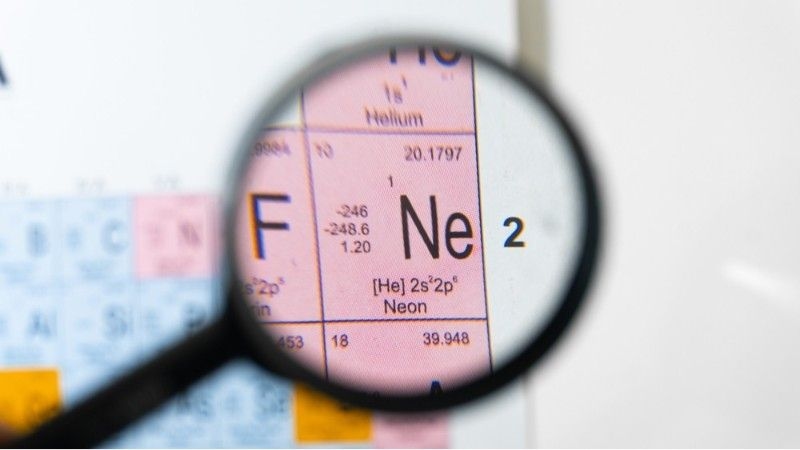
Neon sits on the periodic table as atomic number 10. It’s colorless, odorless, and basically nonreactive. Most neon on Earth is found in tiny traces in the atmosphere, which is why it’s not something people “mine” in chunks. It’s usually separated from air through industrial processes.
This element is also famous for its glow. Not because neon itself is “bright,” but because it emits light when electricity excites the gas.
If you’re collecting neon element facts, keep this in mind: neon’s personality is “quiet until energized,” which honestly sounds like half the population before coffee.
Neon almost never forms chemical compounds. It’s like the introvert of elements, but with strong boundaries.
That classic neon glow is typically a warm red-orange color. Other “neon” colors often come from different gases or phosphor coatings.
Many bright sign colors come from argon, mercury vapor, or phosphor-coated tubes. Neon is famous, but it doesn’t do every color.
Neon makes up a very small fraction of air. It’s there, but you won’t notice it without serious equipment.
Industrial neon comes from liquefying air and separating its components. It’s not mined like metals.
As a gas, neon is less dense than air. If it weren’t so expensive, it could do party-balloon duty. But that would be a tragic use of resources.
Neon isn’t flammable. It also doesn’t support combustion. That makes it safer than many gases in certain environments.
Neon appears in helium-neon lasers, which are used in scientific and educational settings. A small, precise beam. Very neat.
Liquid neon can act as a refrigerant in specialized low-temperature applications. Not something most people do at home, obviously.
Neon turns into a liquid at extremely low temperatures. This is part of why it shows up in cryogenics.
Electricity excites neon’s electrons. When they drop back to normal energy levels, they release light. That glow is basically energy leaving the system in a visible way.
Because it doesn’t react much, it doesn’t contaminate processes the way reactive gases might.
Neon exists in the universe, including in stars. Space is not short on neon. Earth, however, keeps it on a tight budget.
Even people who forget chemistry class tend to remember neon. Branding win.
Neon supply can get tight because production depends on industrial capacity and demand from high-tech sectors. It’s not a simple “make more” situation.
For anyone building a collection of neon gas facts, that last point matters. Neon isn’t “rare” like a mythical substance, but it is limited in how easily it’s produced and distributed.
Check Out: Future Tech Predictions That Past Generations Got Half Right
This is where neon stops being a trivia item and starts being a practical material. neon uses and properties matter because industries pick gases based on stability, purity, and how they behave under energy and pressure.
Where Neon Shows Up:
Neon’s biggest strengths are that it’s inert and it behaves predictably. It doesn’t “surprise react” in ways that ruin sensitive work.
People assume neon is easy because it’s in air. But “in air” doesn’t mean “easy to collect.” Neon is present in tiny amounts, and separating it requires infrastructure. That’s why neon can become expensive or limited depending on market conditions.
Also, neon often gets produced alongside other gases during air separation. So availability is tied to what industries are doing overall, not just to sign shops.
Here’s the fun chemistry takeaway: when neon glows, you’re watching physics and chemistry hold hands. Electricity pushes neon’s electrons into higher energy states. When they relax, the emitted light has specific wavelengths.
That’s why different gases glow different colors. It’s not paint. It’s the internal “signature” of each element.
If someone enjoys interesting chemistry facts, neon is a perfect example because it makes the invisible visible. Energy goes in, light comes out. Clean, dramatic, and surprisingly understandable.
Let’s fix the common misconception: “neon sign” became a general phrase, but many signs use gases other than neon. Neon’s true glow is that warm reddish-orange. Blues, greens, and purples often come from argon and coatings.
So yes, neon is iconic. But it’s not doing every color by itself. It’s like giving one singer credit for an entire band.
The second round of neon element facts is about why neon is chosen for technical work. The key is stability. Neon rarely reacts, which makes it valuable where purity matters. It’s also useful in controlled lighting and laser applications because it behaves consistently under excitation.
In short, neon is the element you pick when you want the gas to behave and not start chemical drama.
The second mention of neon facts comes down to this: neon is famous because it glows, but it’s important because it’s stable, useful, and harder to produce than people assume. It sits quietly in the background of modern tech and optics, then steals attention every time it lights up.
The second set of neon gas facts tends to surprise people most: neon is in the air, but it’s not “cheap air.” It requires separation, purification, and distribution. It’s also nonflammable and inert, which helps explain why it’s trusted in controlled environments.
So if someone ever wondered why neon can be pricey, the answer is basically: tiny percentage, big effort.
The second mention of neon uses and properties is the simplest summary: neon’s value is in its calm behavior. It doesn’t react easily, it can glow predictably when energized, and it supports niche high-precision applications where “stable and clean” is the whole point.
The second mention of facts about neon is an easy mental hook: neon is the element that taught the world how to sell “glow” as an experience. But behind that glow is real science, real industry, and real supply constraints.
Read More: Facts About Cats Every Owner Should Understand Today
The second mention of interesting chemistry facts is the lesson neon quietly delivers: elements have personalities. Some bond. Some fight. Some react to everything. Neon mostly refuses, until you energize it. Then it becomes the star of the show.
Neon glows when electricity excites its electrons. When the electrons return to normal energy levels, they release light, usually a warm reddish-orange.
No. Many signs use other gases like argon or use phosphor coatings to create different colors. “Neon sign” is often a general phrase.
Neon exists in the atmosphere in small amounts, but it’s costly to separate and purify. That production effort is a major reason it can be expensive.
This content was created by AI